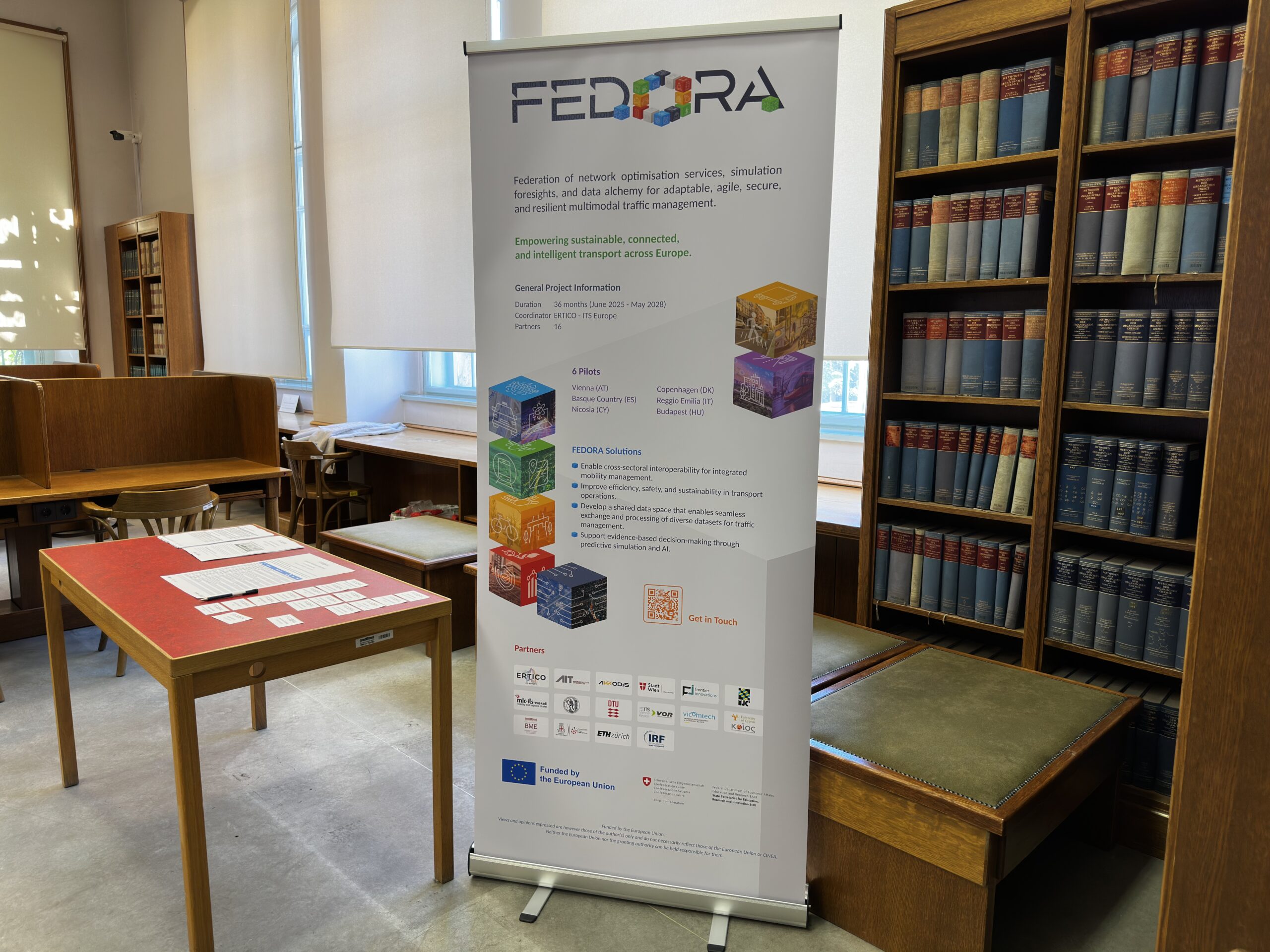
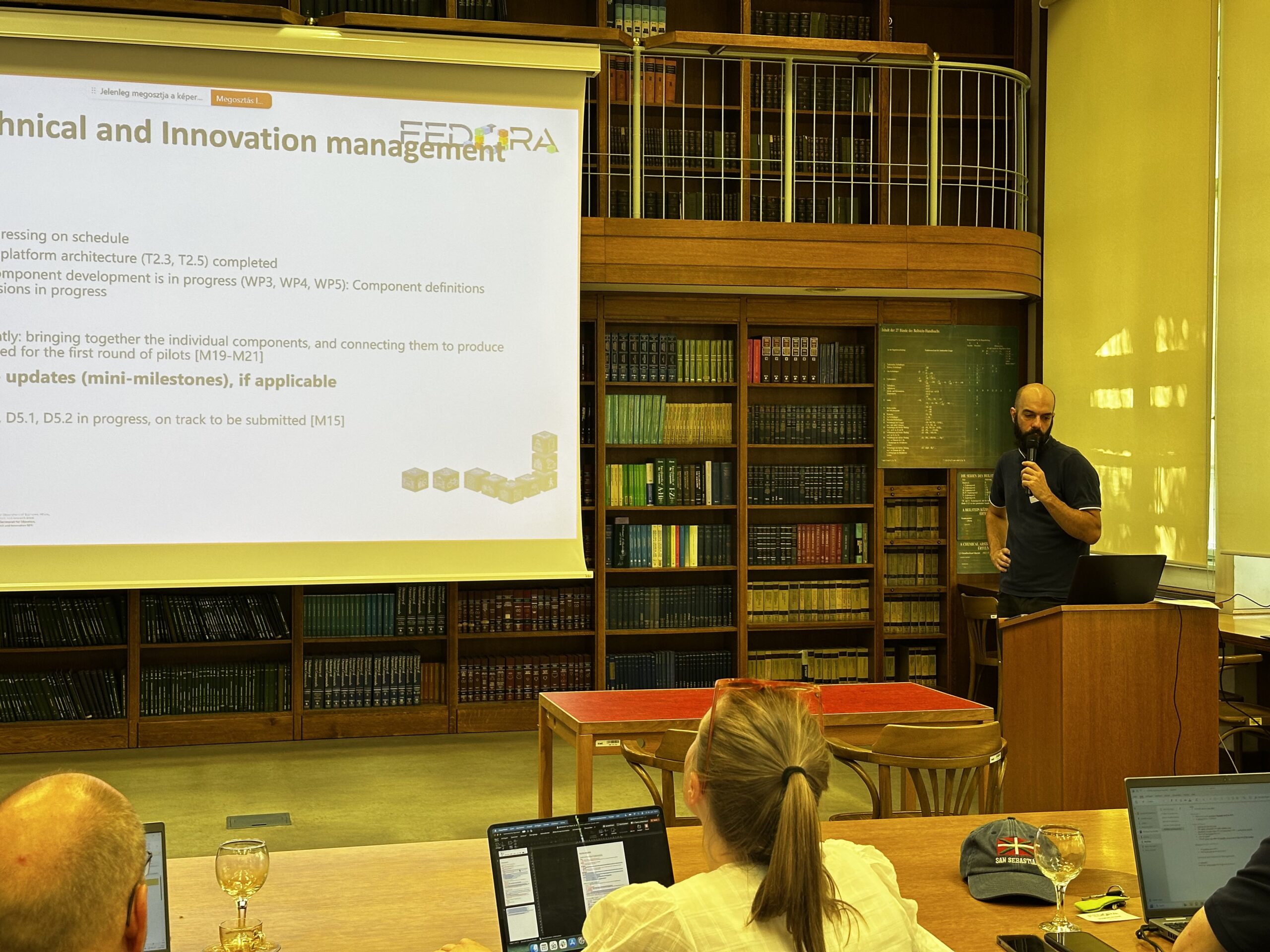
Twelve months after its launch, the Horizon Europe project FEDORA has reached an important milestone. Over the past year, the consortium has transformed ambitious concepts into tangible results, establishing the technical, organisational and collaborative foundations needed to develop the next generation of multimodal traffic management solutions.
One of the project’s most significant achievements has been the creation of the FEDORA cross-sectoral Data Space. During its first year, partners developed the architecture for secure and interoperable data sharing, deployed a public mobility data catalogue, implemented automated metadata harvesting and multilingual translation, and introduced an AI-powered assistant to help users discover and understand available datasets. The project has also achieved its first successful live exchange of mobility data between consortium partners, demonstrating that trusted data sharing can become a reality across organisational boundaries.
FEDORA has also made substantial progress in developing its Integrated Platform, which will connect the project’s diverse technical components into a unified ecosystem. The platform architecture has been defined, creating the basis for integrating data services, optimisation tools and simulation capabilities developed by partners across Europe.
Simulation and modelling have been another major area of progress. During the first year, partners advanced multimodal traffic simulation engines, agent-based behavioural models and innovative traffic management controllers covering applications such as mobility credits, congestion pricing, Mobility as a Service and automated mobility services. At the same time, new Sim2Real methodologies and foresight analysis tools have been developed to help cities evaluate mobility strategies before implementing them in real-world environments.
The project’s six pilot sites have also moved from planning to implementation. Through Living Lab activities and co-creation workshops, local authorities and stakeholders have worked alongside the consortium to define use cases, identify operational requirements and shape future demonstrations. This collaborative process ensures that FEDORA’s solutions respond directly to the needs of cities, transport operators and citizens.
Beyond technology development, the project has established strong foundations for responsible innovation and long-term impact. Governance models are being developed to support collaborative decision-making across stakeholders, while dissemination activities have expanded through scientific publications, conference participation, workshops and growing engagement with the wider European mobility community. The consortium has also begun defining exploitation pathways to ensure that FEDORA’s innovations can continue creating value beyond the lifetime of the project.
The first year has demonstrated the strength of collaboration across the consortium. With key milestones achieved, technical architectures established and the first integrated solutions already operational, FEDORA is now entering a new phase focused on integration, validation and demonstration.
As work continues, the project remains committed to delivering practical, data-driven solutions that help European cities manage increasingly complex transport systems while supporting more sustainable, efficient and resilient mobility for all.