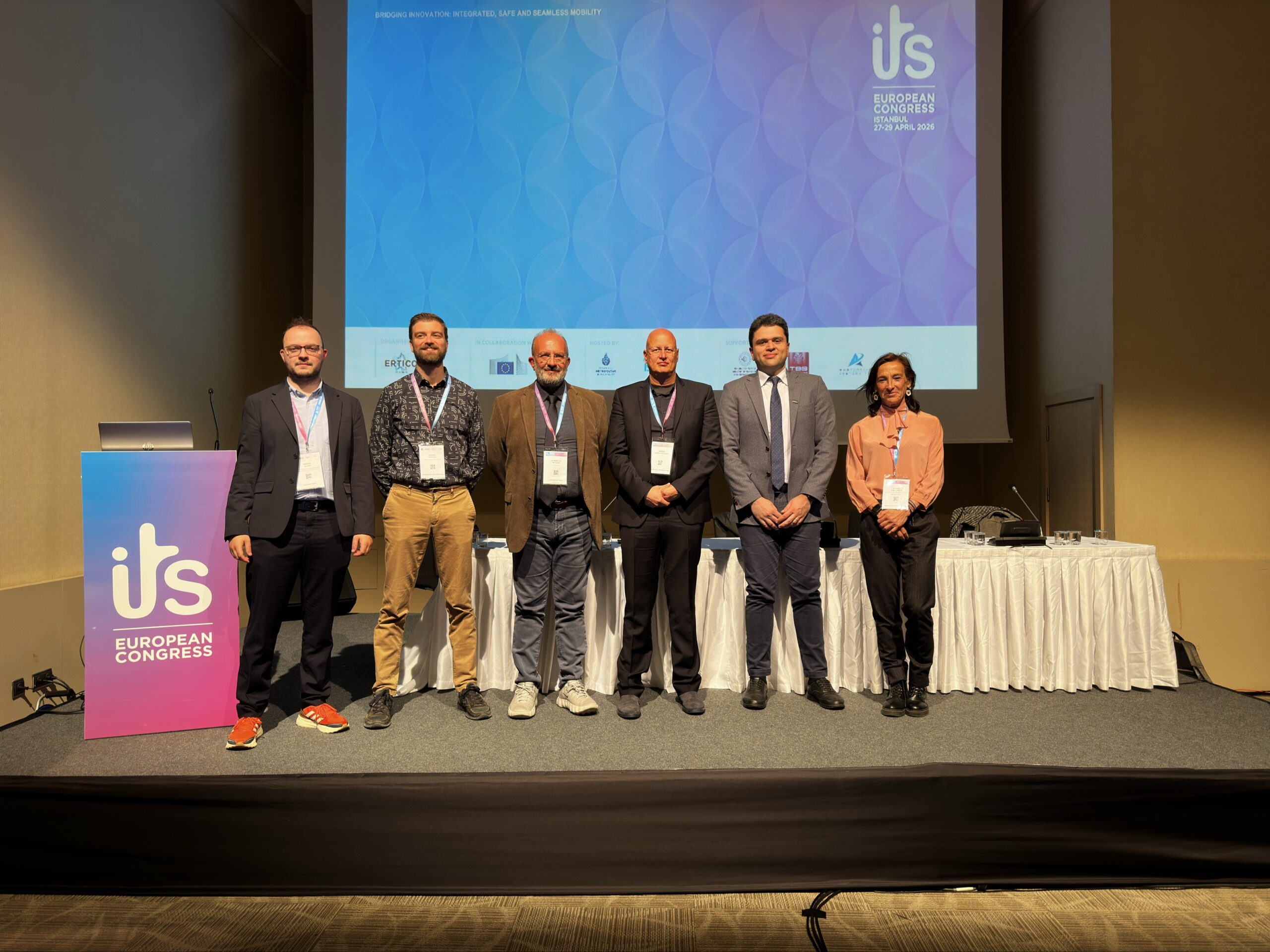
FEDORA was present at the latest ITS European Congress 2026 taking place in Istanbul, Turkey, from 27 to 29 April 2026 through a dedicated presence at the ERTICO stand, where visitors had the opportunity to learn more about the project’s objectives and ongoing activities throughout the event.
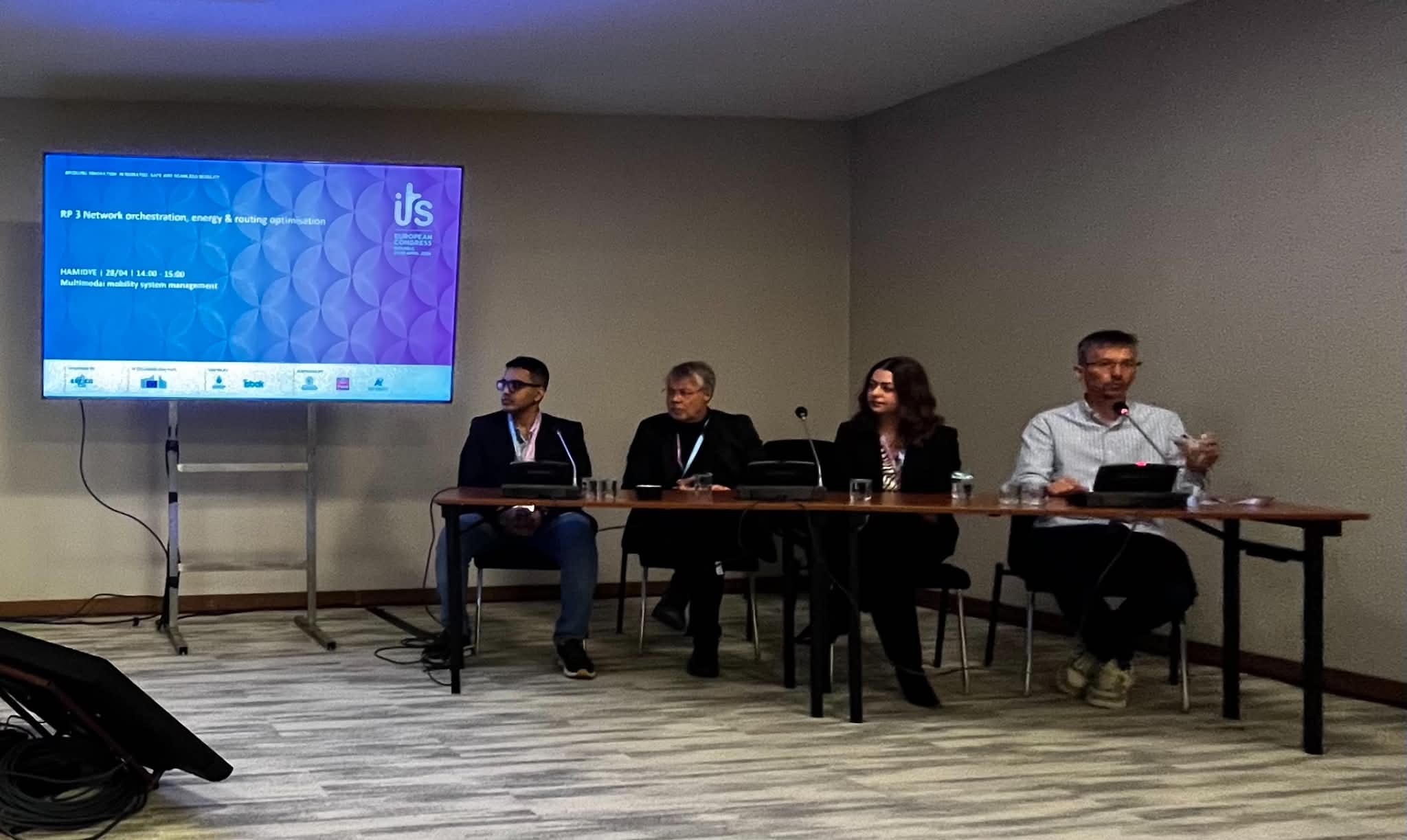
In parallel, FEDORA was also featured in the Special Interest Session (SIS) 42, Driving the future of multimodal traffic management: EU innovations for sustainable and resilient mobility, held on Tuesday, 28 April 2026, represented by project coordinator Dr Roozbeh Mohammadi (ERTICO – ITS Europe), as well as with the Research Paper (RP) Session 3, Network Orchestration, Energy & Routing Optimisation, authored by Katerina Vakrinou, Panagiotis Fafoutelis, Laura Rabadán, Klaus Heimbuchner, Ida Hönigmann, Stephan Krause, Eleni I. Vlahogianni (from FEDORA consortium members NTUA, VICOM, ITS-VIE ).
In the Research Paper Session Katerina Vakrinou presented “Multimodal Network and Traffic Management: Priorities, Stakeholder Needs, Intervention Areas and Insights from EU Pilot Demonstrations.” The session explored how European pilot projects use AI, dynamic pricing, real-time data, and multimodal coordination to improve traffic flow, reduce congestion, and support sustainable mobility. The importance of interoperability, stakeholder collaboration, and real-time data sharing for the large-scale deployment multimodal traffic management solutions was highlighted. The discussions with fellow speakers and the audience showed the relevance of continuing research and pilot demonstrations in order to better understand how these systems can be scaled and integrated into real-world transport networks.
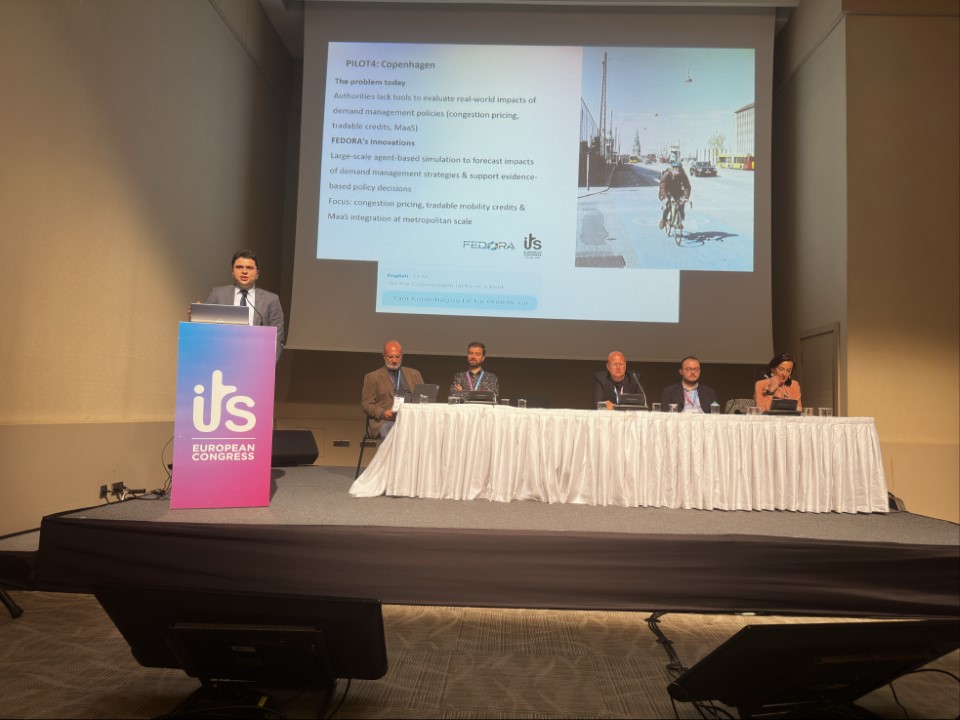
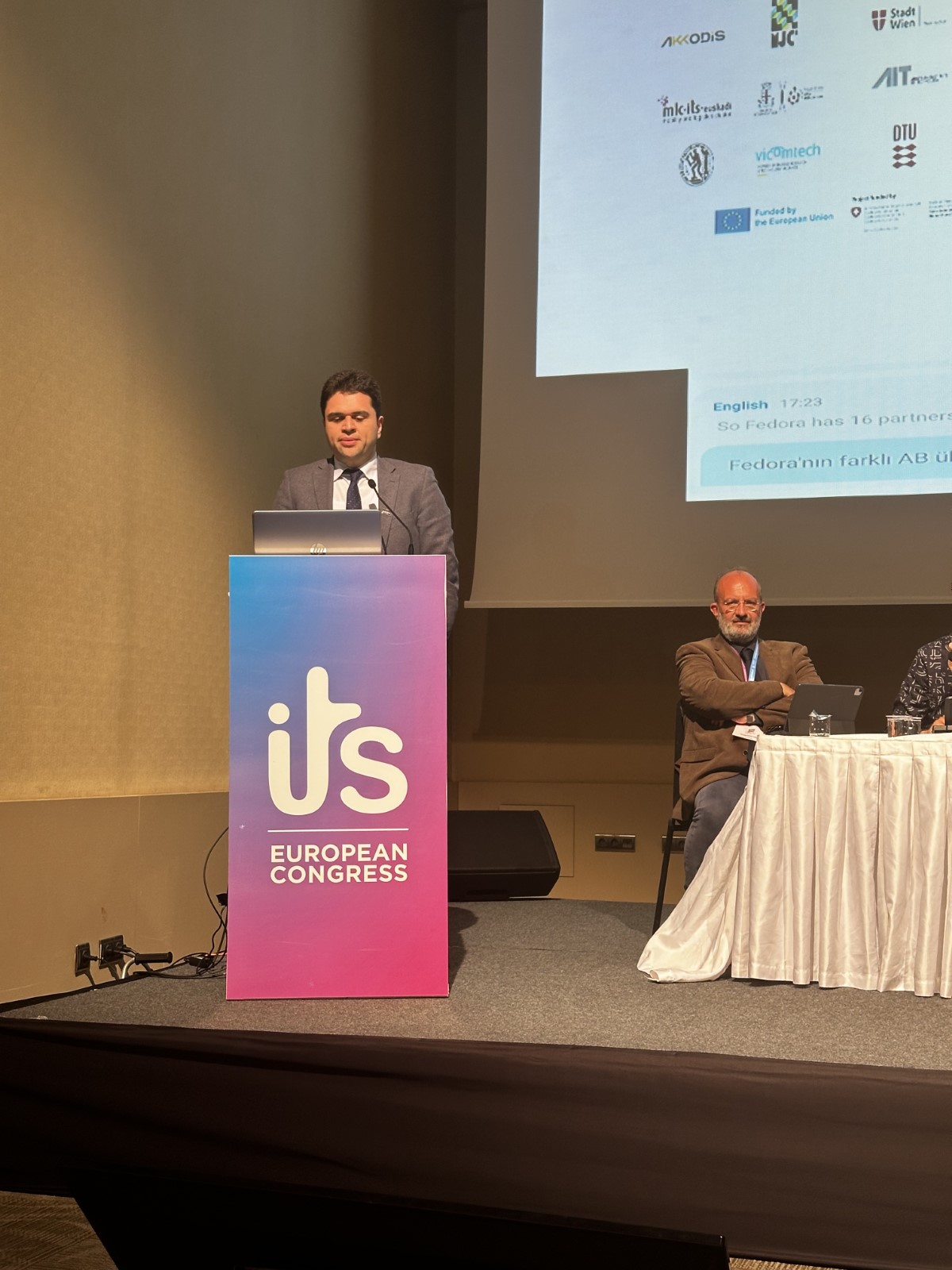
During the SIS presentation, Dr Mohammadi introduced FEDORA’s vision for the future of multimodal traffic and network management, focusing on the need to overcome today’s fragmented mobility ecosystem. He highlighted how current systems still operate in silos, limiting coordination across transport modes and stakeholders. Incident detection, for example, is often not multimodal, while response planning and operational coordination remain disconnected between systems.
FEDORA addresses these challenges by working towards:
- optimising and connecting simulation environments,
- standardising and unifying fragmented mobility data landscapes,
- and enabling interoperability between multimodal traffic management services and systems.
Central to this ambition is the FEDORA Platform, which brings together:
- a multimodal network management services space,
- a cross-sectoral data space for multimodal mobility,
- and an evolutionary simulation space for network-wide foresight analysis.
The presentation also highlighted the project’s pilot activities.
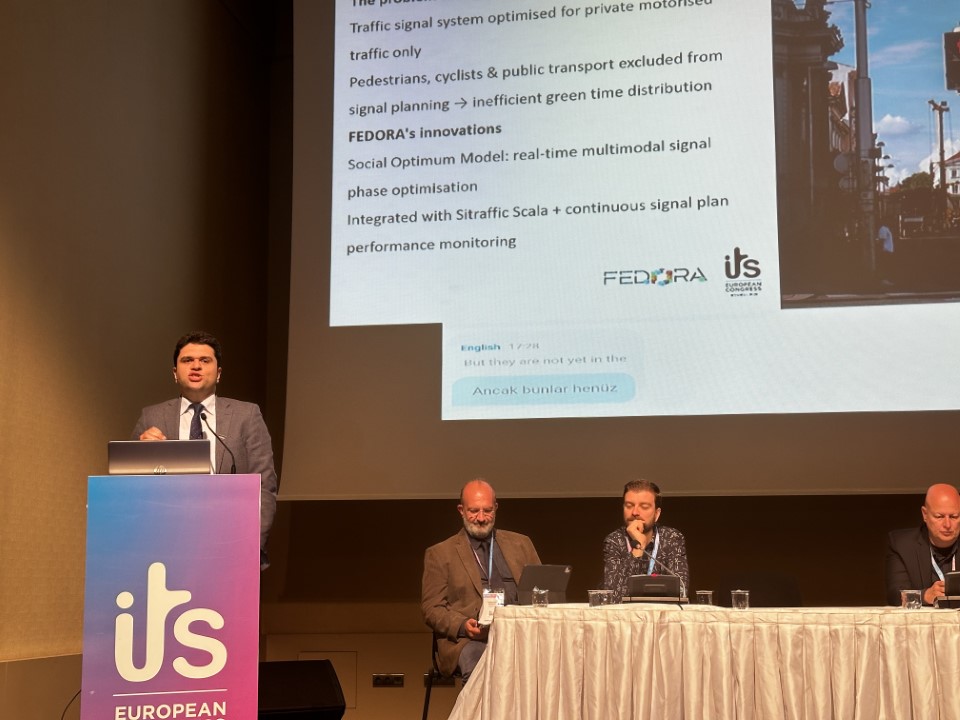
In Vienna, FEDORA tackles the challenge of traffic systems traditionally optimised mainly for motorised transport. The project introduces a social optimum model combined with multimodal signal phase optimisation and signal plan performance monitoring to support more balanced and inclusive urban mobility management.
Meanwhile, in Copenhagen, the project addresses the lack of tools available to evaluate the impact of demand management policies. FEDORA supports large-scale simulation capabilities that enable cities and stakeholders to forecast the potential effects of mobility measures before deployment.
Through both its exhibition presence and conference participation, FEDORA contributed to discussions on the future of integrated, data-driven, and multimodal traffic management across Europe.