CIVITAS Forum 2026

The CIVITAS Forum 2026, the flagship event of the CIVITAS Initiative, will take place from 15-17 September 2026 in the coastal city of Thessaloniki, Greece.

Since 2003, the CIVITAS Forum has been a dynamic conference for smart, inclusive and sustainable urban mobility. The Forum welcomes city representatives, policymakers, practitioners, planners, academics and mobility enthusiasts from across Europe and beyond to exchange ideas, showcase innovation and build lasting connections.

This year, the theme of the CIVITAS Forum is, ‘Roots & Routes: Moving Forward to Competitive, Connected and Resilient Urban Mobility!’. The programme will be structured around three umbrella topics (competitive, connected and resilient mobility) reflecting key priorities for sustainable urban mobility in Europe.

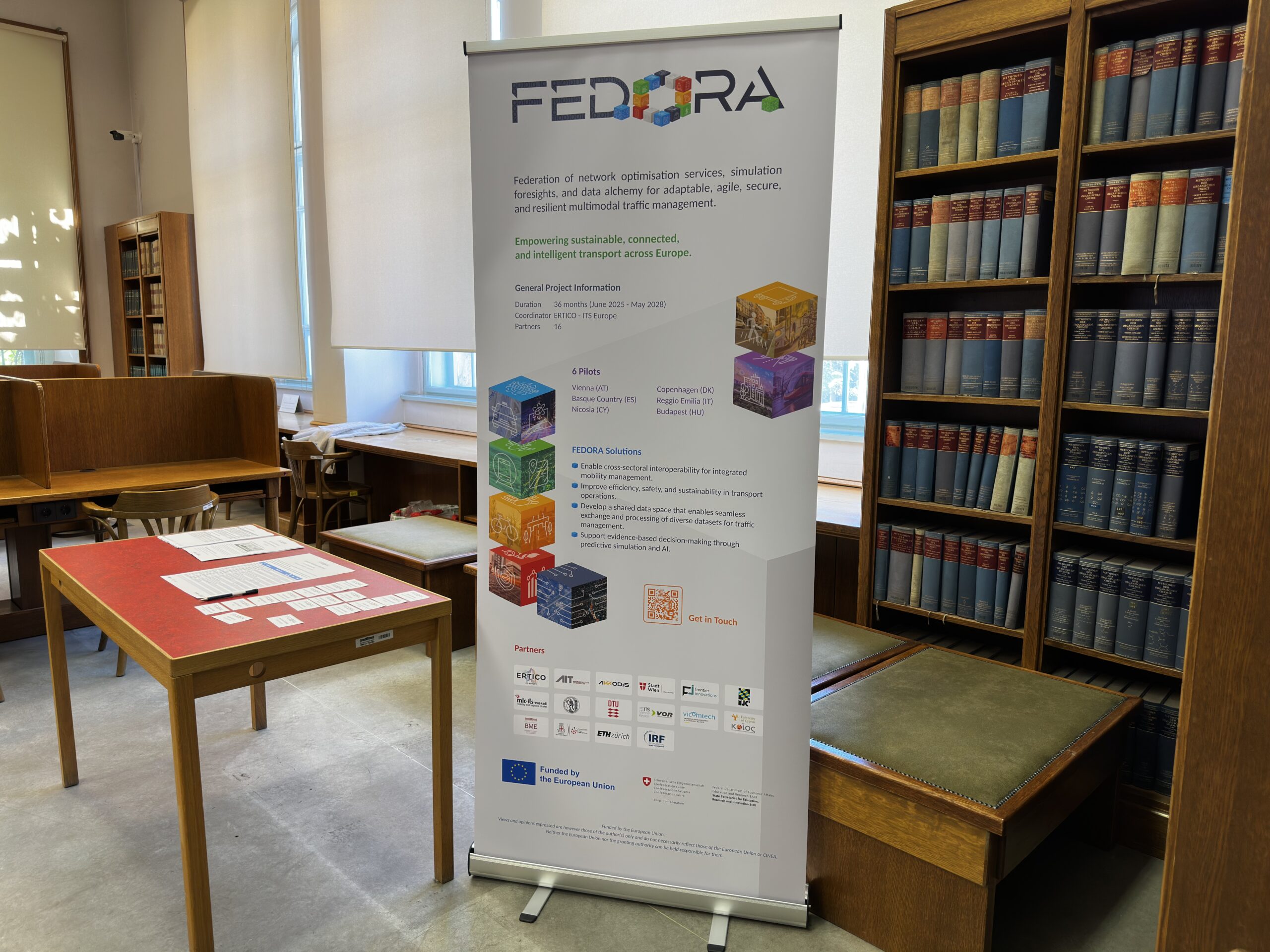
FEDORA will be present at the following events collaborating with other projects:

September 14th (16:30 – 18:00)  – Cluster meeting – Mobility Management and Behavioural Change projects with projects SHIFT2SUSTAIN, MODALSHIFT, ROADS4ALL, TRUST, and GOLIA.

September 15th (09:30-10:30)  – Project Coordinators’ Breakfast

Want to meet us?

You can find FEDORA at the Thematic Corner: Active Mobility, Behaviour Change & City Transition

FEDORA will be presented twice: 

– September 15th, 14:45 – 15:00

– September 16th, 15:45 – 16:15


One Year of FEDORA: Building the Foundations for the Future of Multimodal Mobility

Twelve months after its launch, the Horizon Europe project FEDORA has reached an important milestone. Over the past year, the consortium has transformed ambitious concepts into tangible results, establishing the technical, organisational and collaborative foundations needed to develop the next generation of multimodal traffic management solutions.

One of the project’s most significant achievements has been the creation of the FEDORA cross-sectoral Data Space. During its first year, partners developed the architecture for secure and interoperable data sharing, deployed a public mobility data catalogue, implemented automated metadata harvesting and multilingual translation, and introduced an AI-powered assistant to help users discover and understand available datasets. The project has also achieved its first successful live exchange of mobility data between consortium partners, demonstrating that trusted data sharing can become a reality across organisational boundaries.

FEDORA has also made substantial progress in developing its Integrated Platform, which will connect the project’s diverse technical components into a unified ecosystem. The platform architecture has been defined, creating the basis for integrating data services, optimisation tools and simulation capabilities developed by partners across Europe.

Simulation and modelling have been another major area of progress. During the first year, partners advanced multimodal traffic simulation engines, agent-based behavioural models and innovative traffic management controllers covering applications such as mobility credits, congestion pricing, Mobility as a Service and automated mobility services. At the same time, new Sim2Real methodologies and foresight analysis tools have been developed to help cities evaluate mobility strategies before implementing them in real-world environments.

The project’s six pilot sites have also moved from planning to implementation. Through Living Lab activities and co-creation workshops, local authorities and stakeholders have worked alongside the consortium to define use cases, identify operational requirements and shape future demonstrations. This collaborative process ensures that FEDORA’s solutions respond directly to the needs of cities, transport operators and citizens.

Beyond technology development, the project has established strong foundations for responsible innovation and long-term impact. Governance models are being developed to support collaborative decision-making across stakeholders, while dissemination activities have expanded through scientific publications, conference participation, workshops and growing engagement with the wider European mobility community. The consortium has also begun defining exploitation pathways to ensure that FEDORA’s innovations can continue creating value beyond the lifetime of the project.

The first year has demonstrated the strength of collaboration across the consortium. With key milestones achieved, technical architectures established and the first integrated solutions already operational, FEDORA is now entering a new phase focused on integration, validation and demonstration.

As work continues, the project remains committed to delivering practical, data-driven solutions that help European cities manage increasingly complex transport systems while supporting more sustainable, efficient and resilient mobility for all.


FEDORA partners meet in Budapest for the second General Assembly

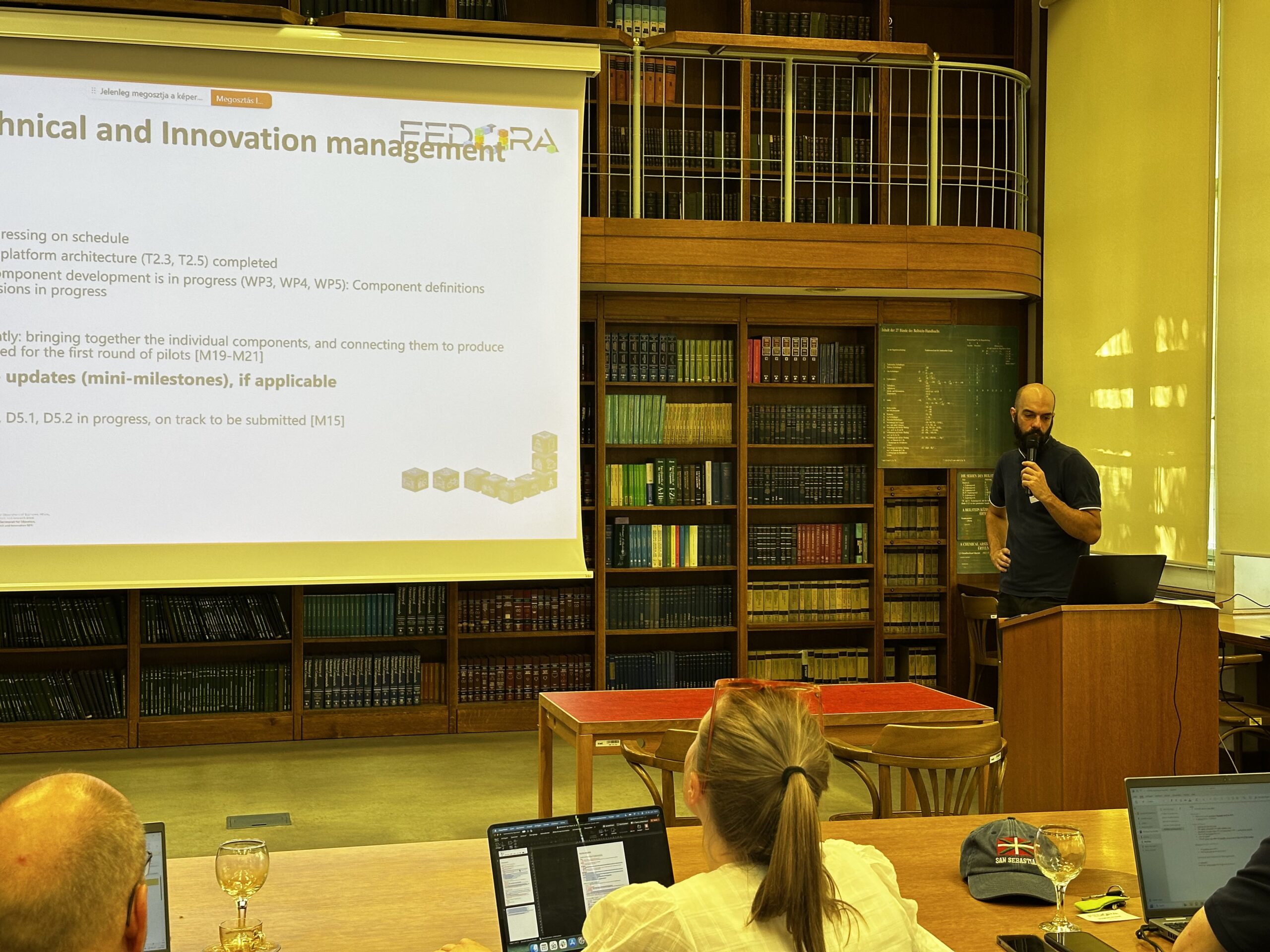
The FEDORA consortium came together in Budapest for its second General Assembly, marking an important milestone as the project enters its second year. Hosted by Budapest University of Technology and Economics (BME), the two-day meeting brought together partners from across Europe to review progress, demonstrate technical developments and plan the next phase of implementation.

With the project advancing steadily, the General Assembly provided an opportunity for researchers, technology providers, public authorities and pilot representatives to exchange knowledge and strengthen collaboration across work packages.

A key focus of the meeting was the progress achieved across FEDORA’s technical developments. Partners presented updates on the project’s cross-sectoral Data Space, integrated platform, governance framework and multimodal simulation environment, highlighting the work completed during the first year and outlining the roadmap towards the first pilot demonstrations.

One of the meeting’s highlights was the live demonstration of FEDORA’s evolving Data Space. Partners showcased the first successful cross-partner exchange of mobility data using Eclipse Dataspace Components (EDC), illustrating how data can be securely shared between organisations while maintaining data sovereignty. Demonstrations also included the project’s public data catalogue and AI-powered chatbot, designed to simplify the discovery and understanding of mobility datasets.

The General Assembly also provided an opportunity to review progress in the six pilot sites. Discussions focused on stakeholder engagement, Living Lab activities and the refinement of pilot use cases, ensuring that the technologies under development remain aligned with the operational needs of cities and transport authorities.

Interactive workshops encouraged partners to contribute directly to the project’s next steps. Governance sessions explored stakeholder mapping and the development of a multi-level governance framework, while technical workshops gathered feedback on the Data Space components and AI tools. A dedicated exploitation workshop helped partners identify pathways for maximising the long-term impact of FEDORA’s key innovations.

Communication, dissemination and collaboration were also high on the agenda. Partners reviewed upcoming scientific publications, conferences and stakeholder engagement activities, while discussing opportunities to strengthen cooperation with related European initiatives, including the CIVITAS community and the Horizon Results Booster programme.

Looking ahead, the consortium will focus on integrating the project’s technical components, delivering the next series of milestones and preparing the first round of pilot demonstrations. As FEDORA moves from design and development towards real-world validation, the General Assembly reaffirmed the consortium’s shared commitment to delivering innovative solutions for smarter, more sustainable multimodal traffic management across Europe.