FEDORA at the 8th Conference on Sustainable Mobility & Intelligent Transportation Systems

Assistant Professor Panayiotis Kolios from the University of Cyprus, a partner in the FEDORA project, participated in the 8th Conference on Sustainable Mobility & Intelligent Transportation Systems, held in Nicosia, Cyprus, on 29 and 30 October 2026.
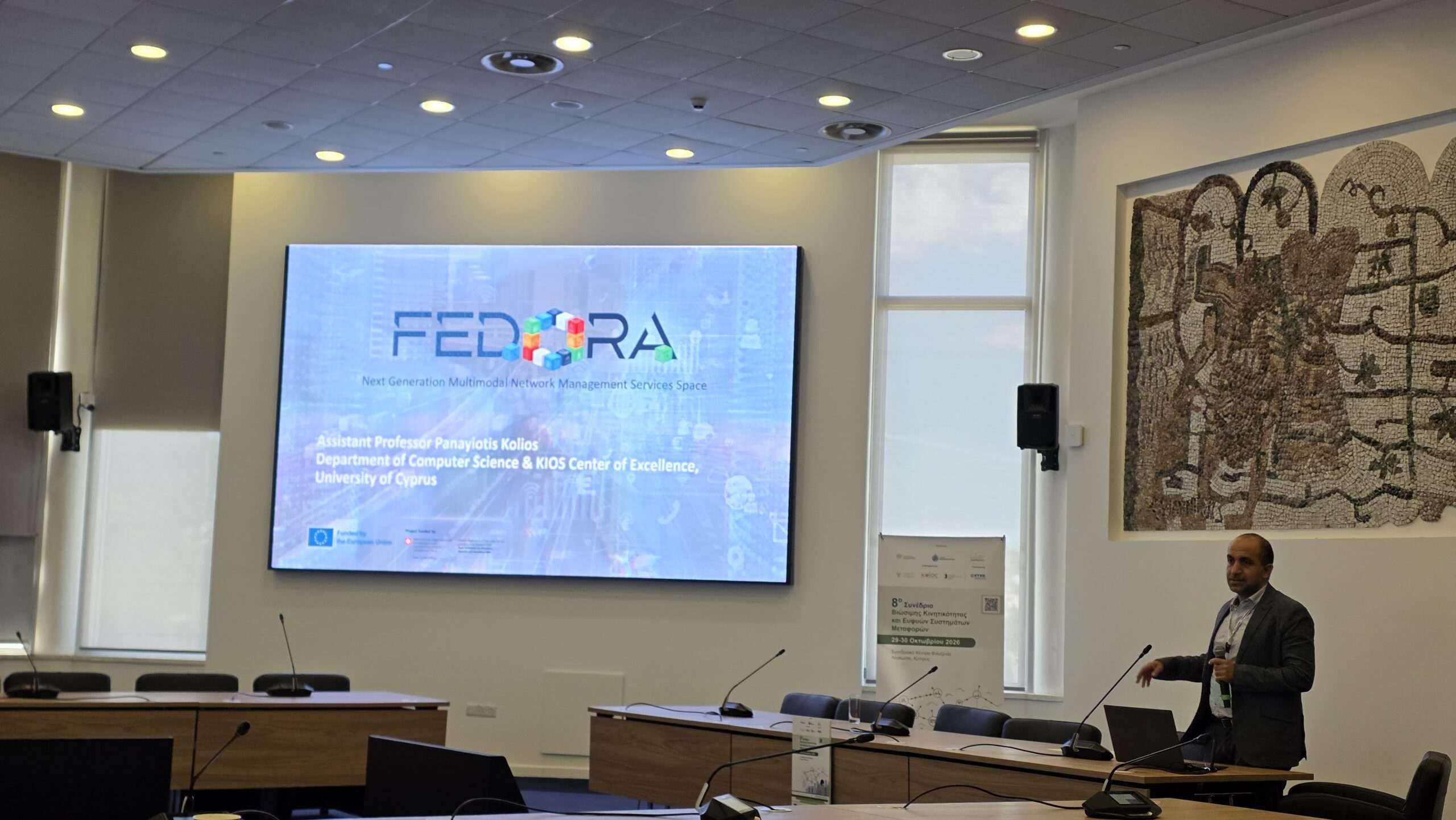
During the conference, he presented FEDORA’s vision and objectives, explaining how the project aims to improve multimodal traffic management through better use of mobility data, advanced optimisation tools, and simulation technologies.

Particular attention was given to the Nicosia Pilot, one of FEDORA’s six demonstration sites across Europe. Led by the University of Cyprus, the pilot examines how Unmanned Aerial Vehicles (UAVs) could be integrated into urban transport networks. Its activities focus on identifying suitable locations for mobility hubs, connecting aerial and ground transport services, and using UAVs to monitor traffic conditions.
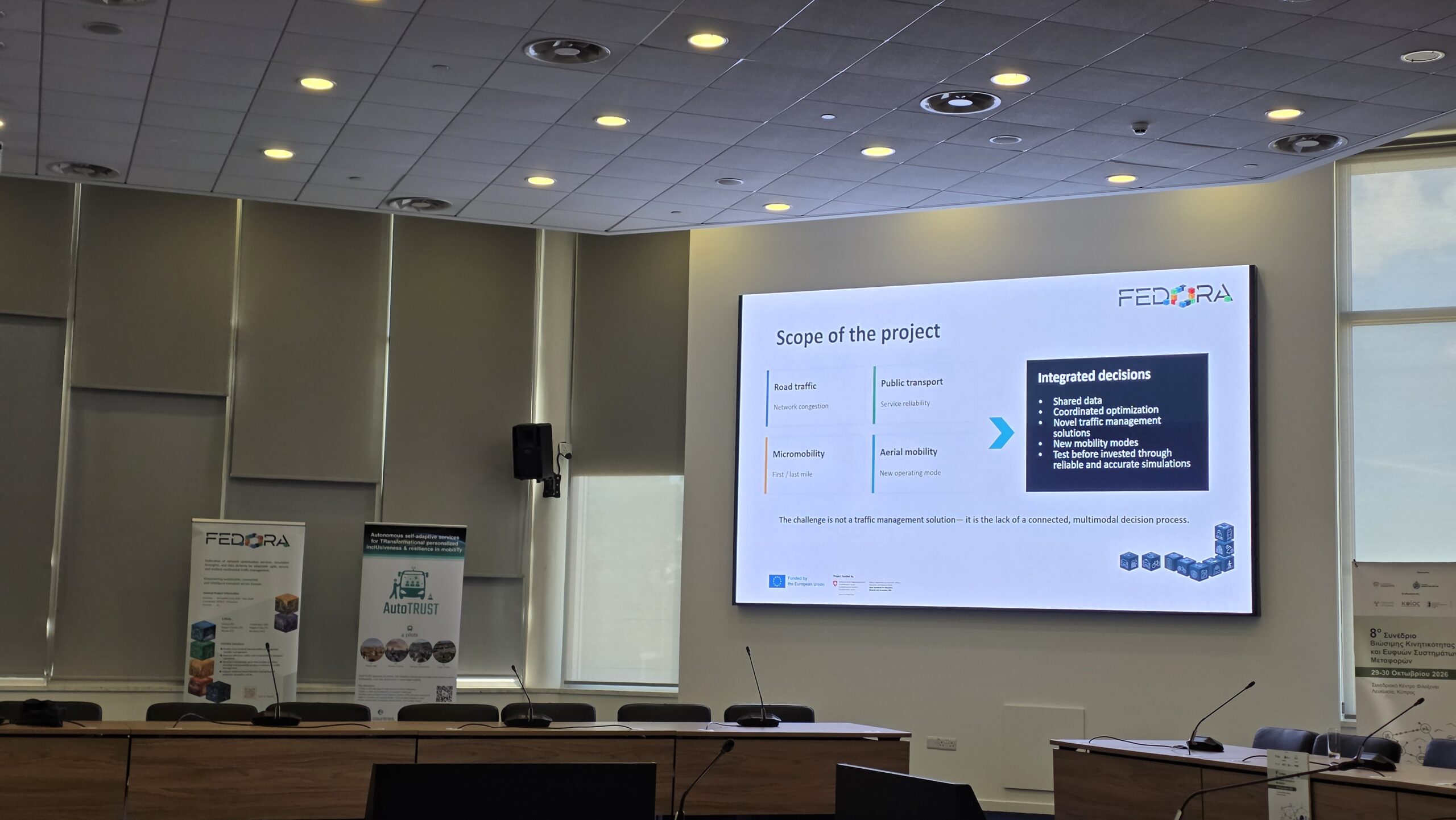
Through simulation and evaluation, the pilot will investigate whether these solutions can help reduce travel times and congestion while making urban transport networks more efficient and resilient.

The conference also gave FEDORA the opportunity to engage with public and private sector stakeholders working in sustainable mobility and intelligent transport.
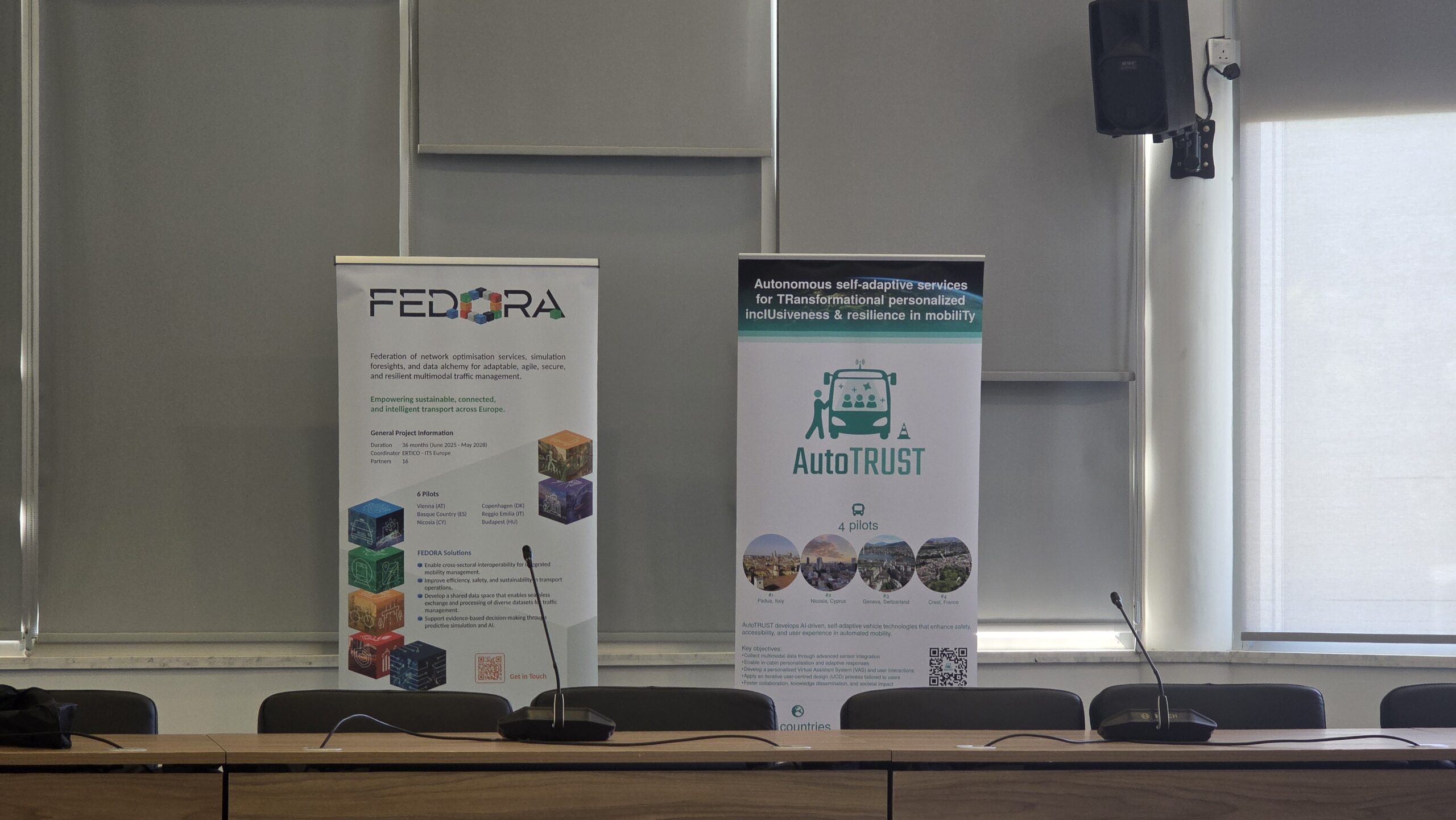
Discussions with researchers, industry representatives, and transport professionals provided a chance to exchange experiences, explore potential collaborations, and introduce FEDORA’s work to a wider audience.

These exchanges helped bring greater attention to the project’s research and its potential applications in urban mobility, particularly the use of UAV technologies to support more coordinated and sustainable transport systems.

The FEDORA Blog #03 – Towards Fairer and Smarter Traffic Management: ETH Zurich’s Contributions to FEDORA

Who should get priority when our roads become congested?

Traditional traffic management focuses primarily on reducing delays and improving traffic flow. Yet not every journey has the same urgency, and treating all travellers equally does not necessarily lead to fair outcomes. Within the EU-funded FEDORA project, researchers at ETH Zurich are exploring how innovative incentive mechanisms and advanced simulation tools can make urban mobility more efficient, flexible and fair.


Rethinking Traffic Prioritisation and Incentives Through Artificial Currencies

One focus of ETH Zurich’s research is the development of new approaches to managing traffic demand and allocation of supply. Conventional congestion pricing can help regulate road use, but often faces public resistance due to fairness concerns. Could alternative approaches offer a better balance?

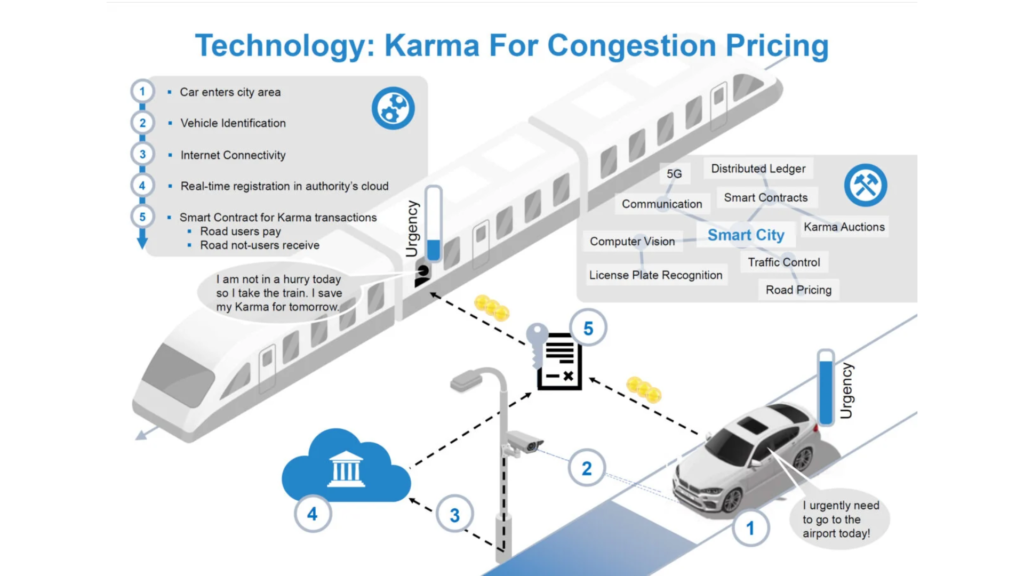
To investigate this question, ETH Zurich is exploring Karma mechanisms, which use non-monetary credits to coordinate how travellers share limited road capacity. By combining game theory with multi-agent reinforcement learning, researchers investigate how individual decisions and interactions can lead to more efficient and equitable outcomes.

Another promising concept is the Urban Priority Pass, which allows travellers with particularly urgent needs to receive priority at traffic signals. Using a Manhattan-inspired case study, ETH Zurich has investigated how such prioritisation can work and how markets could allocate priority according to different travellers’ needs. 

From Research Concepts to Open-Source Simulation

Developing innovative traffic management strategies is only the first step. How can we test them before introducing them into real cities?

To address this challenge, ETH Zurich has developed and released a first prototype of FEDORA’s modular simulation platform, publicly available on GitHub under the GNU General Public License.

The platform is designed to connect different traffic simulation environments with optimisation and control methods through reusable interfaces. Its initial prototype demonstrates the Priority Pass concept and includes a prototypic simulation demonstrator based on FEDORA’s Vienna pilot.

By making the framework modular and openly accessible, ETH Zurich aims to facilitate experimentation, reproducibility and collaboration across the FEDORA consortium and the wider research community.


Looking ahead

Together, these activities bring FEDORA closer to a future in which traffic management considers not only how efficiently vehicles move, but also how fairly limited transport resources are shared.

This entry is part of the FEDORA Blog series, where FEDORA partners share their insights from working in the project. This contribution has been provided by FEDORA partner ETH Zurich.

FEDORA Addresses Multimodal Traffic Governance at Tomorrow.Mobility World Congress 2026

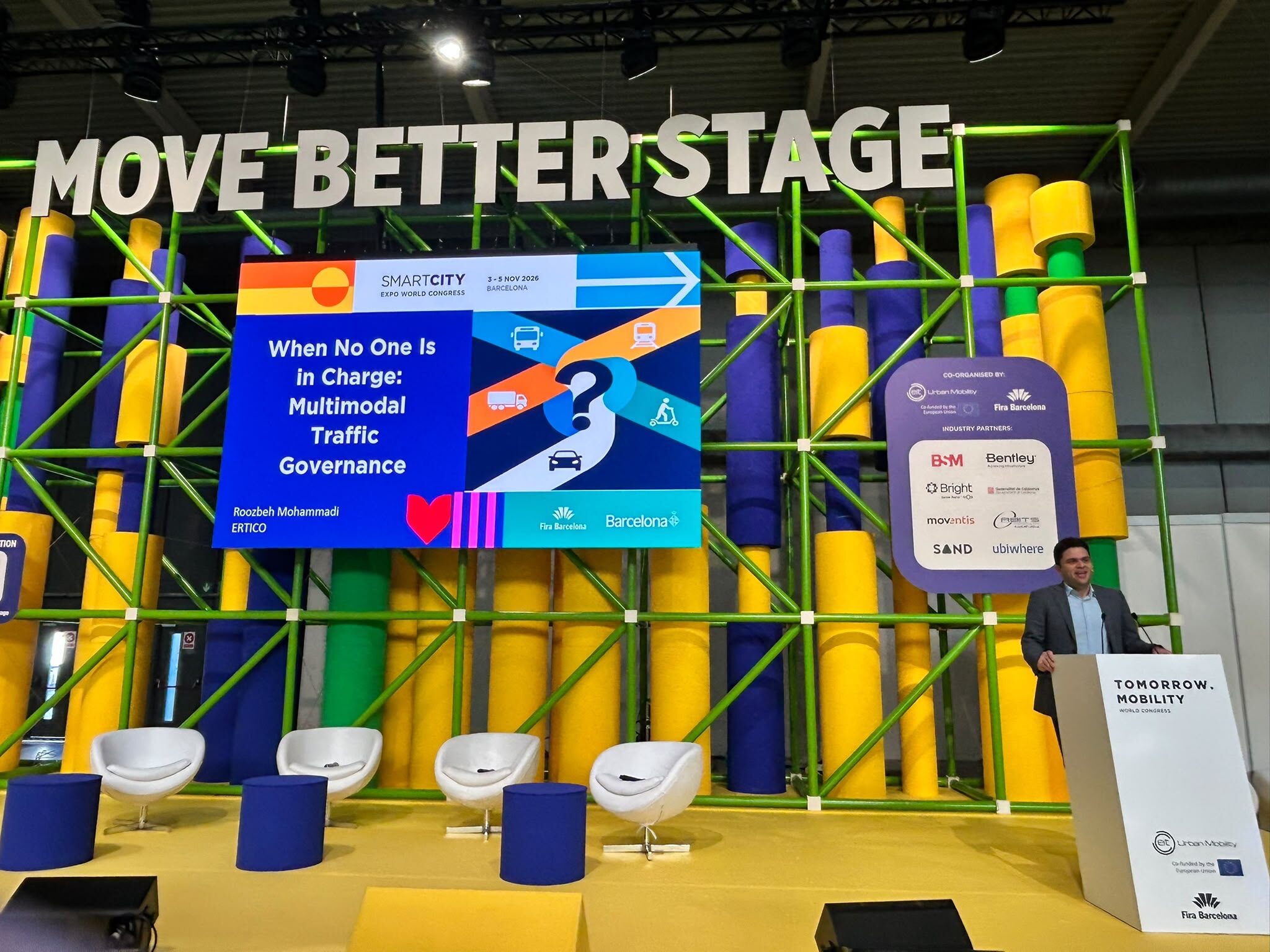
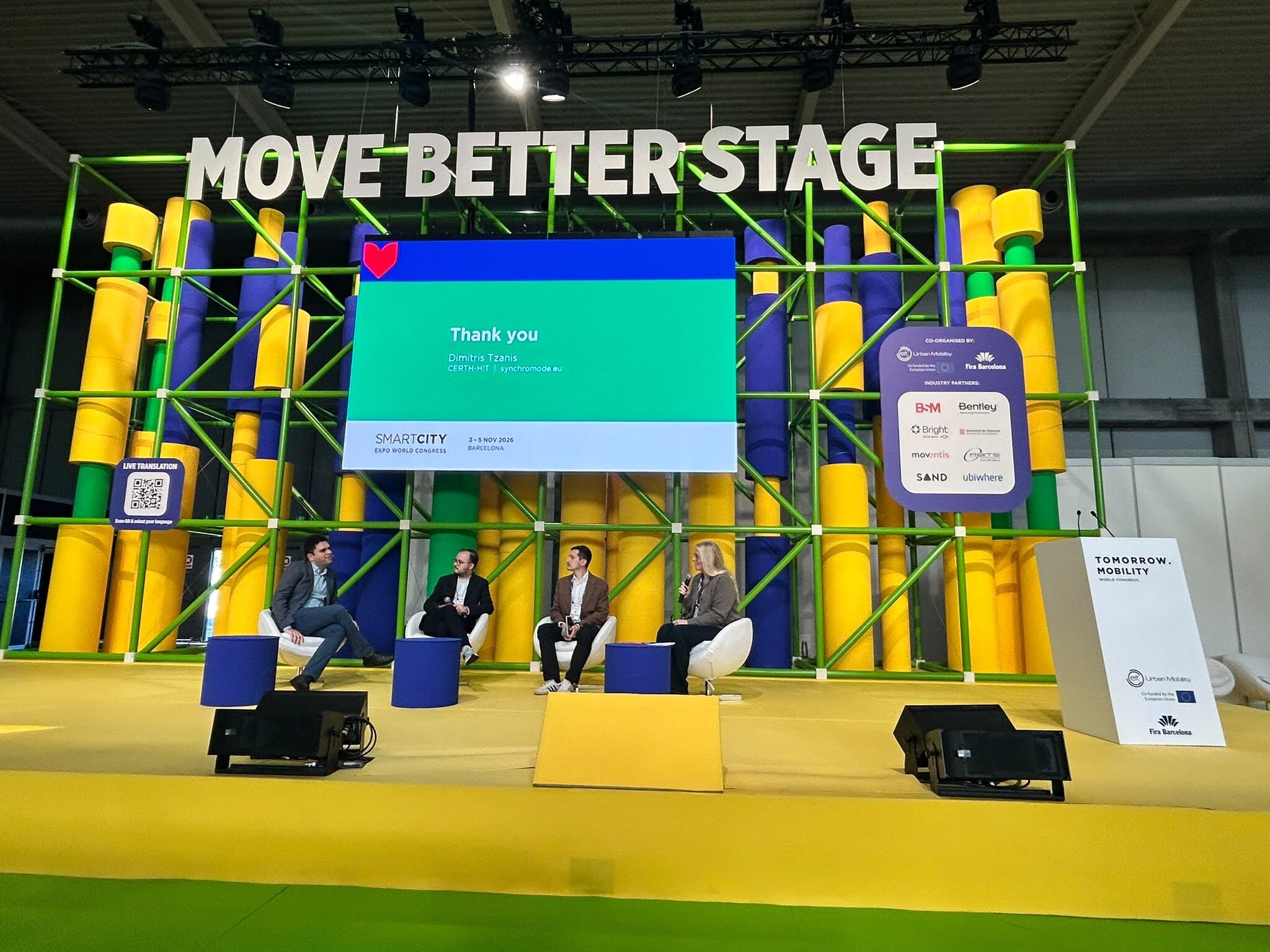
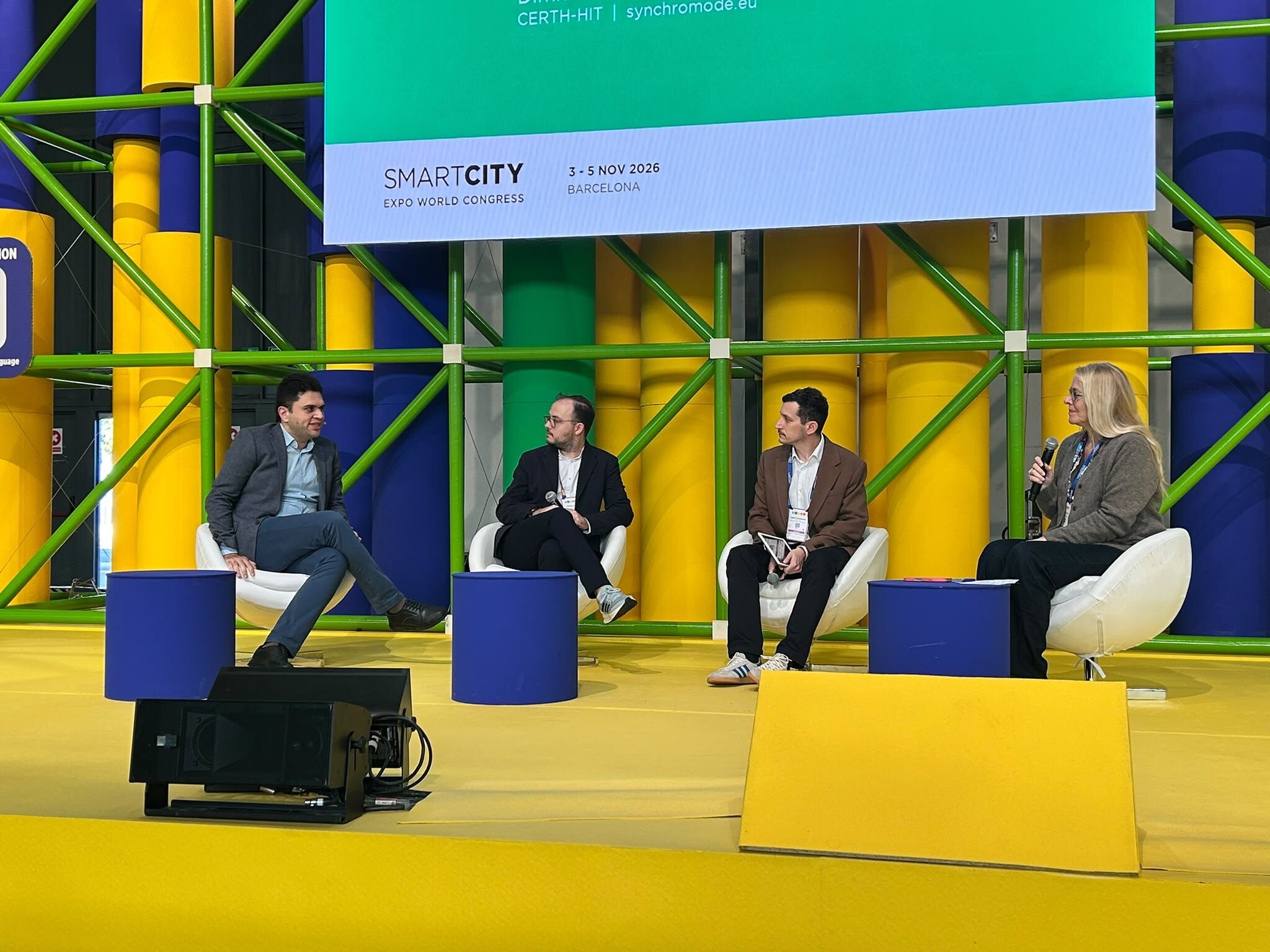
On 4 November 2026, our FEDORA Project Coordinator, Dr. Roozbeh Mohammadi (ERTICO), moderated the session “When No One Is in Charge: Multimodal Traffic Governance” at the Tomorrow.Mobility World Congress in Barcelona.


The discussion addressed a challenge closely linked to FEDORA’s research: how transport authorities, operators and mobility providers can coordinate decisions when disruptions affect multiple transport networks, particularly when responsibilities are divided among different organisations.

The panel brought together three experts who examined the legal, operational and data-sharing aspects of multimodal transport governance.

Dr. Johanna (Yanna) Tzanidaki (AYA Consulting), member of FEDORA’s External Advisory Board (EAB), highlighted the limitations of existing legal frameworks. She explained that responsibilities are typically assigned to individual transport modes, while disruptions often affect entire networks. The growing use of artificial intelligence adds further complexity, particularly regarding accountability and decision-making authority.

Fellow panelists Dr. Aggelos Soteropoulos (AustriaTech) and Dimitris Tzanis (CERTH-HIT) contributed practical perspectives on multimodal transport governance. Dr. Soteropoulos shared examples from Austria, illustrating how cooperation between national, regional and municipal authorities supports coordinated responses to transport disruptions, while Dimitris Tzanis highlighted the need for formal agreements, clear responsibilities and sustainable funding models to enable effective data sharing beyond individual research projects.

The issues raised during the session reflect the challenges that FEDORA is working to address. As the project develops a federated ecosystem combining secure mobility data sharing, advanced optimisation services and simulation tools, it also examines how different transport stakeholders can cooperate and make coordinated decisions to put these solutions into practice.

This work is addressed through Task 2.4, Decision-Making Mental Model and Network Management Governance, which explores institutional responsibilities and decision-making processes to support more coordinated multimodal traffic management.

FEDORA’s six European pilots, supported by local Living Labs, provide different operational and institutional contexts for examining these challenges and identifying practical requirements.

FEDORA’s “Guarda Dove Vai” Pilot Takes Place in Reggio Emilia on 13 November

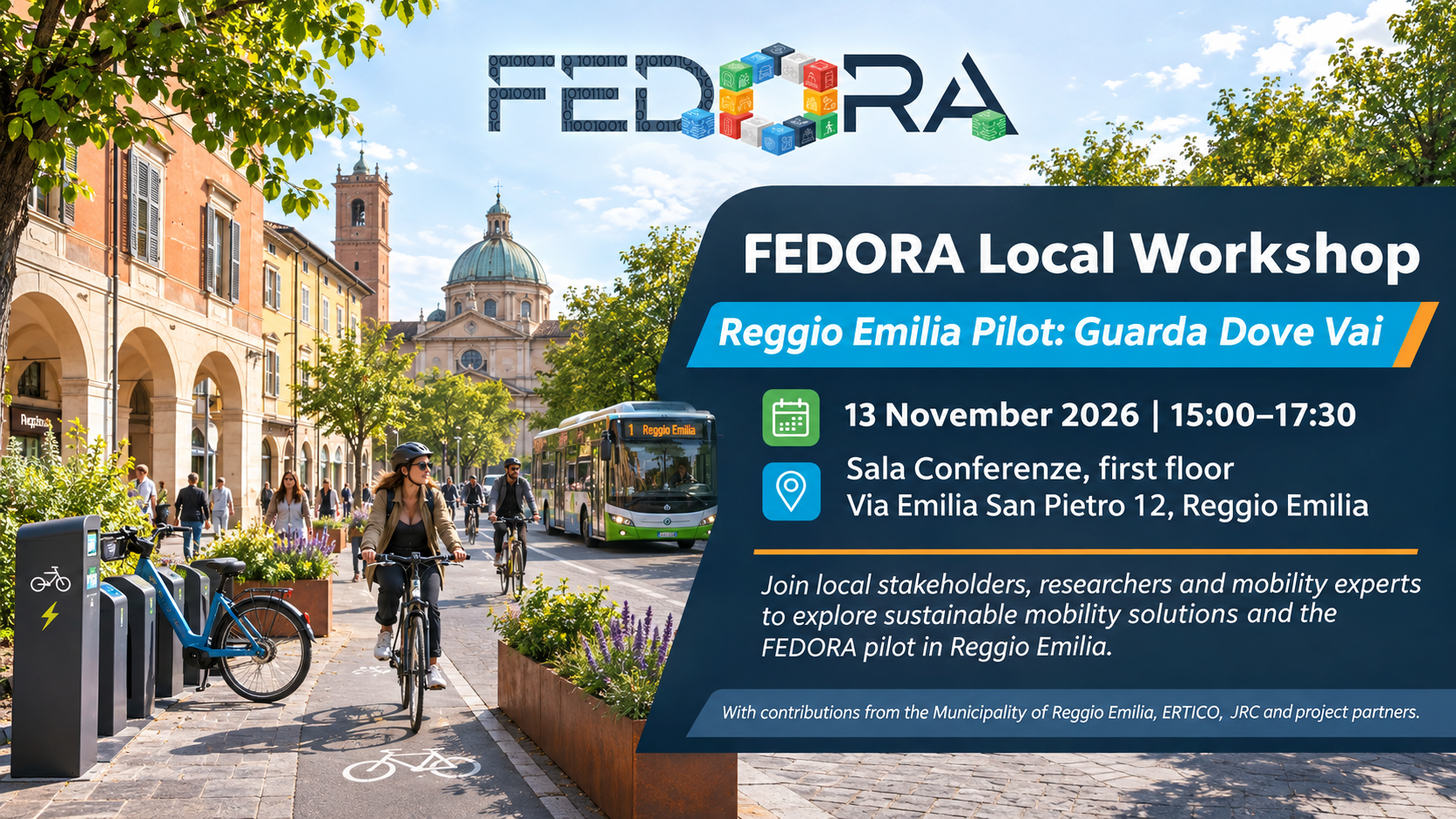
On 13 November 2026, the FEDORA project will bring together local stakeholders, mobility experts and researchers in Reggio Emilia, Italy, for a workshop dedicated to its Italian pilot, “Guarda Dove Vai.” The event will take place at Via Emilia San Pietro 12, from 15:00 to 17:30.

Organised by the Municipality of Reggio Emilia, the workshop forms part of a local communication campaign aiming to recruit 500 participants for the pilot. The initiative seeks to engage employees, students and local stakeholders in exploring how incentives and digital technologies can support more sustainable urban mobility.

The programme will open with remarks from Carlotta Bonvicini, Councillor for Climate Policies and Sustainable Mobility, followed by Roozbeh Mohammadi, FEDORA Project Coordinator at ERTICO, who will introduce the broader European project.

Biagio Ciuffo from the European Commission’s Joint Research Centre (JRC) will discuss the role of credits and incentives in managing mobility demand. Paolo Gandolfi, Head of the Urban Mobility Project Unit at the Municipality of Reggio Emilia, will present the “Guarda Dove Vai” pilot, including its phases, participation opportunities and incentive mechanisms.

The workshop will also explore the technology supporting the pilot, including on-board devices and data collection, with a contribution planned from Octo Telematics.

FEDORA Pilot Webinar: From Innovation to Real-World Mobility Solutions

🗓️ 10 December 2026

⏰14:00 - 15:30 (CET)

📍 Online

FEDORA Pilot Webinar: From Innovation to Real-World Mobility Solutions

How can innovative digital solutions help cities and regions manage increasingly complex multimodal transport systems?

The EU-funded FEDORA project is developing a federated digital ecosystem to improve multimodal mobility management through secure data sharing, AI-enabled optimisation and advanced simulation tools.

This webinar will showcase the project’s six pilot demonstrations and provide insights into how FEDORA’s solutions are being developed and validated in real-world mobility environments.

Representatives from the pilot sites will present their local challenges, specific use cases and approaches to implementing innovative mobility solutions. The webinar will also explore how the pilots contribute to more efficient, sustainable, resilient and user-centred transport systems. 

Covering six diverse locations – Vienna, the Basque Country, Nicosia, Copenhagen, Reggio Emilia and Budapest – the session will highlight the importance of adapting innovative solutions to different regional contexts and mobility needs.

The webinar will provide an opportunity for public authorities, transport operators, researchers, policymakers and other mobility stakeholders to learn about FEDORA’s progress, exchange experiences and discuss opportunities for future implementation and replication.

Join us to discover how FEDORA is translating innovation into practical solutions for the future of multimodal mobility.

Funded by the European Union and SERI (Swiss State Secretariat for Education, Research and Innovation). Views and opinions expressed are however those of the author(s) only and do not necessarily reflect those of the European Union, CINEA or SERI. Neither the European Union nor the granting authority can be held responsible for them.

NB: By signing up to attend this webinar, you agree to the webinar being recorded for future use.

The FEDORA blog #01 – FEDORA beyond its borders: building synergies for the future of mobility

Eighteen months into FEDORA, one thing has become increasingly clear: innovation in mobility does not happen in isolation. It depends on connecting ideas, expertise, data and people across projects, sectors and communities. 

As project coordinator, ERTICO – ITS Europe has been working with the FEDORA consortium to build these connections and ensure that our work contributes to, and learns from, the wider European mobility ecosystem. 

“FEDORA helps cities and operators manage traffic across all modes as one connected network, using shared data, simulation and optimisation. Our six pilots will show what that means in practice, and our aim is tools that any European city can adopt” 

— Dr. Roozbeh Mohammadi, FEDORA Project Coordinator, ERTICO – ITS Europe 

 Joining forces for multimodal traffic management 

One important avenue for collaboration is the Multimodal Traffic Management Cluster (MTMC), bringing together European research and innovation projects working on the future of multimodal traffic management. 

By joining this community, FEDORA is contributing its perspective on more coordinated, data-driven and resilient mobility systems, while exchanging knowledge with projects addressing complementary challenges in network management, traffic optimisation and emerging mobility services. 

These connections are about more than sharing results. They create opportunities to identify common challenges, learn from different approaches and help ensure that innovation across European projects develops in a more coordinated way. 

Connecting technology with behaviour 

Technology is only one part of the mobility transition. New services, tools and traffic management approaches ultimately need to work for the people and communities who use them. 

This is where our engagement with the CIVITAS Initiative and its Mobility Management and Behavioural Change community is particularly valuable. CIVITAS brings together cities and mobility stakeholders to advance sustainable urban mobility, with a strong focus on knowledge exchange and practical implementation. 

For FEDORA, this provides an opportunity to connect our technological and operational innovation with a deeper understanding of mobility behaviour — and to explore how different approaches can work together to support more sustainable travel choices. 

Bringing different perspectives to FEDORA 

Our outreach also extends to the FEDORA External Advisory Board, whose members bring expertise from across research, industry, technology and policy. Their perspectives provide an important external lens on the project, helping us challenge assumptions, identify emerging needs and keep our work connected to real-world mobility challenges. 

After 18 months, these relationships are becoming an increasingly important part of FEDORA. For ERTICO, coordination is not only about bringing partners together within the project, but also about connecting FEDORA to the wider community working to shape the future of mobility. 

As the project moves forward, we will continue to build these bridges — because meaningful innovation is strengthened when knowledge, perspectives and solutions can move beyond individual projects and become part of a shared European mobility ecosystem.