FEDORA at the ITS European Congress 2026 – A recap and photogallery

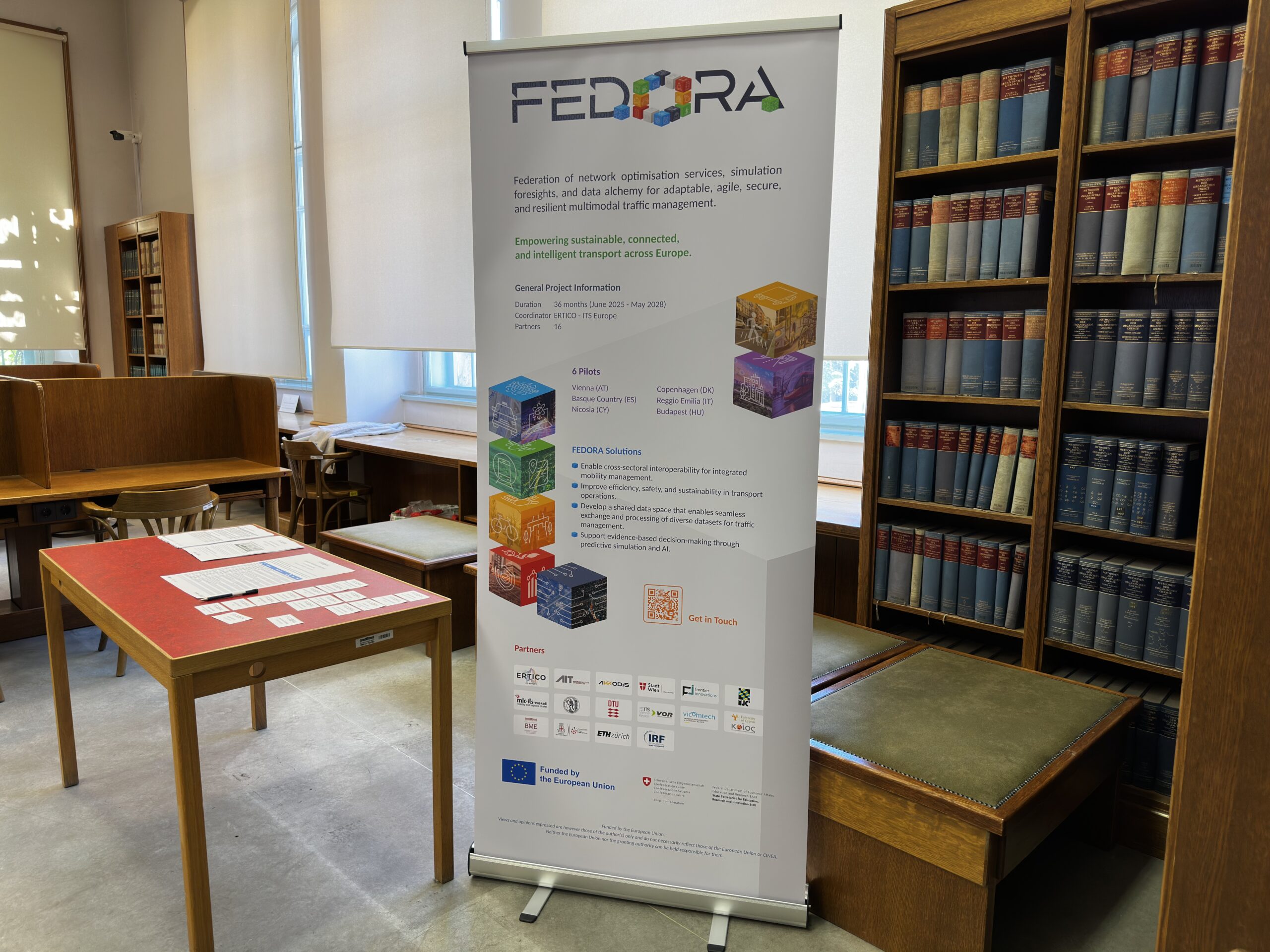
FEDORA was present at the latest ITS European Congress 2026 taking place in Istanbul, Turkey, from 27 to 29 April 2026 through a dedicated presence at the ERTICO stand, where visitors had the opportunity to learn more about the project’s objectives and ongoing activities throughout the event.

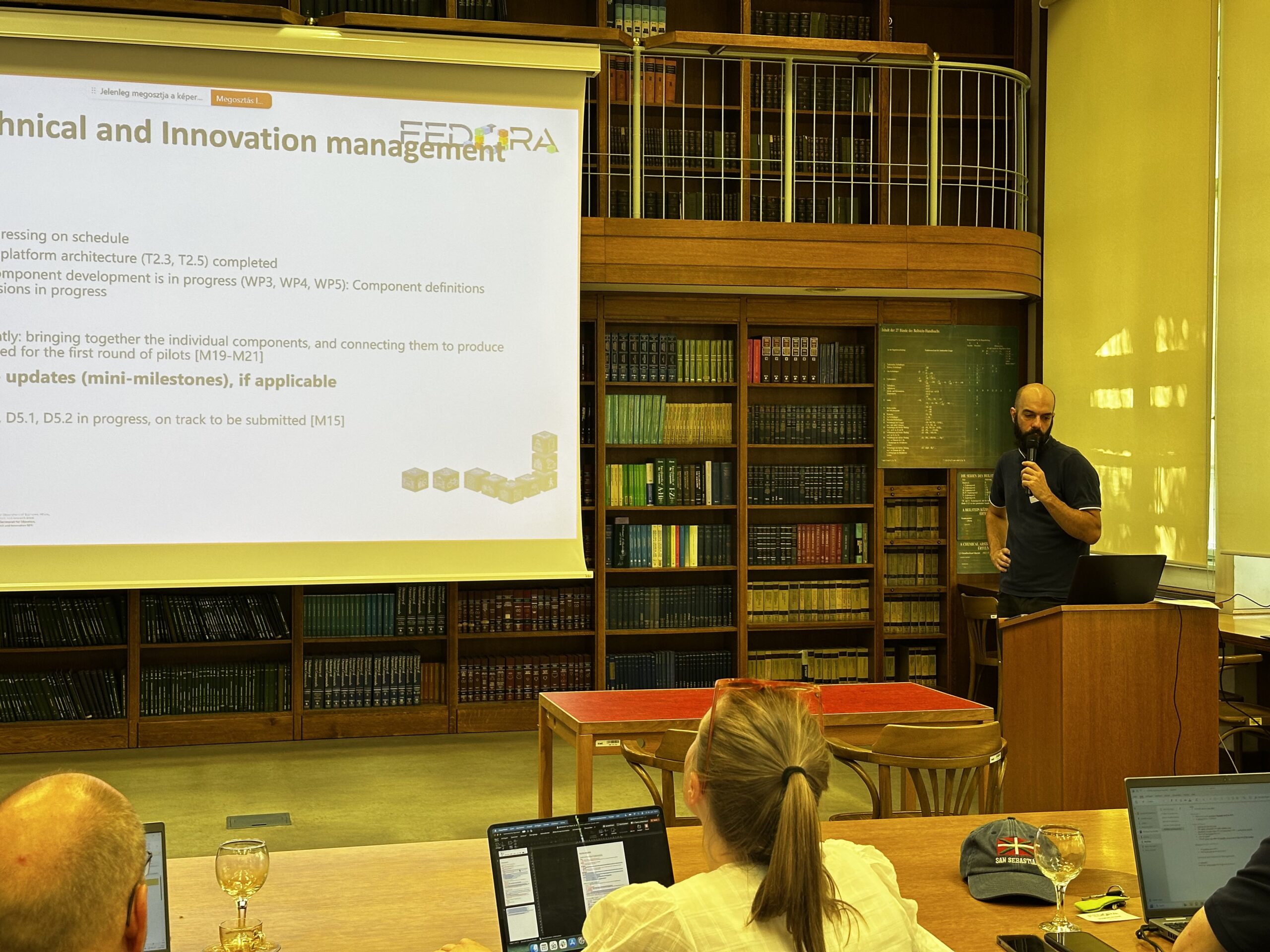
In parallel, FEDORA was also featured in the Special Interest Session (SIS) 42, Driving the future of multimodal traffic management: EU innovations for sustainable and resilient mobility, held on Tuesday, 28 April 2026, represented by project coordinator Dr Roozbeh Mohammadi (ERTICO – ITS Europe), as well as with the Research Paper (RP) Session 3, Network Orchestration, Energy & Routing Optimisation, authored by Katerina Vakrinou, Panagiotis Fafoutelis, Laura Rabadán, Klaus Heimbuchner, Ida Hönigmann, Stephan Krause, Eleni I. Vlahogianni (from FEDORA consortium members NTUA, VICOM, ITS-VIE ).


In the Research Paper Session Katerina Vakrinou presented “Multimodal Network and Traffic Management: Priorities, Stakeholder Needs, Intervention Areas and Insights from EU Pilot Demonstrations.” The session explored how European pilot projects use AI, dynamic pricing, real-time data, and multimodal coordination to improve traffic flow, reduce congestion, and support sustainable mobility. The importance of interoperability, stakeholder collaboration, and real-time data sharing for the large-scale deployment multimodal traffic management solutions was highlighted. The discussions with fellow speakers and the audience showed the relevance of continuing research and pilot demonstrations in order to better understand how these systems can be scaled and integrated into real-world transport networks.

During the SIS presentation, Dr Mohammadi introduced FEDORA’s vision for the future of multimodal traffic and network management, focusing on the need to overcome today’s fragmented mobility ecosystem. He highlighted how current systems still operate in silos, limiting coordination across transport modes and stakeholders. Incident detection, for example, is often not multimodal, while response planning and operational coordination remain disconnected between systems.

FEDORA addresses these challenges by working towards:

  • optimising and connecting simulation environments,
  • standardising and unifying fragmented mobility data landscapes,
  • and enabling interoperability between multimodal traffic management services and systems.

Central to this ambition is the FEDORA Platform, which brings together:

  • a multimodal network management services space,
  • a cross-sectoral data space for multimodal mobility,
  • and an evolutionary simulation space for network-wide foresight analysis.


The presentation also highlighted the project’s pilot activities.

In Vienna, FEDORA tackles the challenge of traffic systems traditionally optimised mainly for motorised transport. The project introduces a social optimum model combined with multimodal signal phase optimisation and signal plan performance monitoring to support more balanced and inclusive urban mobility management.

Meanwhile, in Copenhagen, the project addresses the lack of tools available to evaluate the impact of demand management policies. FEDORA supports large-scale simulation capabilities that enable cities and stakeholders to forecast the potential effects of mobility measures before deployment.

Through both its exhibition presence and conference participation, FEDORA contributed to discussions on the future of integrated, data-driven, and multimodal traffic management across Europe.

FEDORA Scientific Publication: Urban Priority Pass: Fair signalised intersection management accounting for passenger needs through prioritisation

Fedora Project researchers have published “Urban Priority Pass: Fair signalised intersection management accounting for passenger needs through prioritisation” in Transportation Research Interdisciplinary Perspectives. The paper presents a reservation-based traffic prioritisation system designed to account for passenger urgency and improve fairness and efficiency in urban mobility systems. The research was authored by Kevin Riehl, Anastasios Kouvelas, and Michail A. Makridis.


Highlights

  • Introduces a reservation-based system for urban signal prioritisation.
  • Enables drivers to trade travel time based on urgency and willingness to pay.
  • Aligns mobility resources with individual needs while improving overall welfare.
  • Demonstrates equity and efficiency gains using an urban case study.
  • Shows large revenue potential for cities without new infrastructure

Abstract

Over the past few decades, efforts of road traffic management and practice have predominantly focused on maximising system efficiency and mitigating congestion from a system perspective. This efficiency-driven approach implies the equal treatment of all vehicles, which often overlooks individual user experiences, broader social impacts, the fact that users are heterogeneous in their urgency and that they experience different costs when being delayed. Even though they are the major bottleneck for traffic in cities, no dedicated instrument enables prioritisation of individual drivers at intersections. The Priority Pass is a reservation-based, economic controller that expedites entitled vehicles at signalised intersections, without causing arbitrary delays for non-entitled vehicles and without affecting transportation efficiency de trop. Particularly applicable to large, congested cities with rich sensor infrastructure, the prioritisation of vulnerable road users, emergency vehicles, commercial taxi and delivery drivers, or urgent individuals, this approach can enhance road safety, and achieve social, environmental, and economic goals. A case study of Manhattan demonstrates the feasibility of individual prioritisation (up to 40% delay reduction), and quantifies the potential of the Priority Pass to gain social welfare benefits for the people. A market for prioritisation could generate up to $ 1 million in daily revenue for Manhattan, and equitably allocate delay reductions to those in need. The findings provide a foundation for integrating user-centric prioritisation mechanisms into emerging smart city traffic management systems, supporting data-driven policymaking and equitable mobility planning.

FEDORA Scientific Publication: Quantitative fairness—A framework for the design of equitable cybernetic societies


Researchers within the Fedora Project have published a new paper titled “Quantitative fairness—A framework for the design of equitable cybernetic societies” in Computers in Human Behavior: Artificial Humans. The publication explores quantitative approaches to fairness in cybernetic and algorithmic systems, with a focus on equitable decision-making, transparency, and socially feasible resource allocation frameworks. The paper was authored by Kevin Riehl, Anastasios Kouvelas, and Michail A. Makridis.


Highlights

  • Quantitative basis for fairness in cybernetic and algorithmic systems.
  • Unified framework linking distributive, procedural, and algorithmic fairness.
  • Bridges engineering, economics, and social science fairness concepts
  • Tools for designing and evaluating fair decision-making algorithms
  • Case studies show trade-offs between equality, efficiency, and fairness

Abstract

Advancements in computer science, artificial intelligence, and control systems have catalyzed the emergence of cybernetic societies, where algorithms play a pivotal role in decision-making processes shaping nearly every aspect of human life. Automated decision-making for resource allocation has expanded into industry, government processes, critical infrastructures, and even determines the very fabric of social interactions and communication. While these systems promise greater efficiency and reduced corruption, misspecified cybernetic mechanisms harbor the threat for reinforcing inequities, discrimination, and even dystopian or totalitarian structures. Fairness thus becomes a crucial component in the design of cybernetic systems, to promote cooperation between selfish individuals, to achieve better outcomes at the system level, to confront public resistance, to gain trust and acceptance for rules and institutions, to perforate self-reinforcing cycles of poverty through social mobility, to incentivize motivation, contribution and satisfaction of people through inclusion, to increase social-cohesion in groups, and ultimately to improve life quality. Quantitative descriptions of fairness are crucial to reflect equity into algorithms, but only few works in the fairness literature offer such measures; the existing quantitative measures in the literature are either too application-specific, suffer from undesirable characteristics, or are not ideology-agnostic. This study proposes a quantitative, transactional, and distributive fairness framework based on an interdisciplinary foundation that supports the systematic design of socially-feasible decision-making systems. Moreover, it emphasizes the importance of fairness and transparency when designing algorithms for equitable, cybernetic societies, and establishes a connection between fairness literature and resource allocating systems.

FEDORA Advisory Board Kick-off: Shaping the Path Ahead

The FEDORA project has successfully held its Advisory Board Kick-off Meeting, bringing together leading experts from mobility, research, industry, and policy to support and guide the project from its early stages.

The meeting, opened by project coordinator ERTICO – ITS Europe, included contributions from partners Frontier Innovations, Akkodis, Vicomtech, the National Technical University of Athens, and the International Road Federation (IRF). Discussions focused on the project’s strategic direction and long-term impact on mobility innovation.

The Advisory Board brings together representatives from across the transport and technology ecosystem, including Susan Harris (ITS Australia), Biagio Ciuffo (European Commission Joint Research Centre), Klaus Bogenberger (Technical University of Munich), Dr. Johanna Tzanidaki (AYA Consulting), Johannes Lauer (HERE Technologies), and Marco Comerio (Cefriel).

With expertise spanning academia, industry, and policy, the Advisory Board will support FEDORA in ensuring its research and developments remain aligned with real-world needs and emerging mobility challenges. The meeting concluded with a shared commitment to ongoing collaboration and knowledge exchange throughout the project lifecycle.

FEDORA Holds First General Assembly in San Sebastián

The FEDORA project held its first General Assembly on 27–28 January 2026 in San Sebastián, Spain, bringing together consortium partners from across Europe to review progress and define the next steps of the project. Co-organised by the Basque Country Mobility and Logistics Cluster and hosted by Vicomtech, the meeting focused on strategic alignment, technical development, pilot planning, and collaboration activities supporting federated traffic management and multimodal mobility solutions.

Over the two-day event, partners discussed the development of the FEDORA Platform, the TM2.0 Platform, data strategy, Living Labs, and upcoming pilot demonstrations in diverse urban and rural environments. Interactive workshops and technical sessions helped strengthen a shared vision for sustainable, resilient, and user-centred mobility across Europe. The General Assembly also marked an important milestone in moving the project from planning and research towards implementation and validation activities.

FEDORA kicks off at ERTICO’s Offices

On 18 – 19 June 2025, the FEDORA project (Federation of network optimisation services, simulation foresights, and data alchemy for adaptable, agile, secure, and resilient multimodal traffic management) held its Kick-Off meeting in the ERTICO offices in Brussels, Belgium.

Continue reading