

Modern urban traffic control systems can adjust signal timings in real time to keep traffic flowing efficiently. However, adaptive traffic signal control is still primarily designed to optimize conditions for motorized traffic, while the needs of pedestrians and cyclists are rarely considered explicitly. As a result, real-time detection of non-motorized traffic demand is often lacking. As cities pursue more sustainable, inclusive, and people-centered mobility solutions, this approach is becoming increasingly inadequate.
The Vienna pilot within the FEDORA project represents an important step towards a more comprehensive and inclusive approach to traffic management. Led by ITS Vienna Region and implemented in collaboration with the Austrian Institute of Technology (AIT), the City of Vienna, and additional project partners, the pilot investigates how real-time information from all transport modes can be integrated into traffic signal control.
A central challenge is the availability of reliable real-time data for vulnerable road users. To address this limitation, the pilot evaluates innovative camera-based sensing technologies capable of detecting and counting not only motor vehicles but also pedestrians and cyclists. By expanding the range of data available to traffic management systems, these sensors provide a significantly richer understanding of traffic conditions at intersections and along urban corridors.
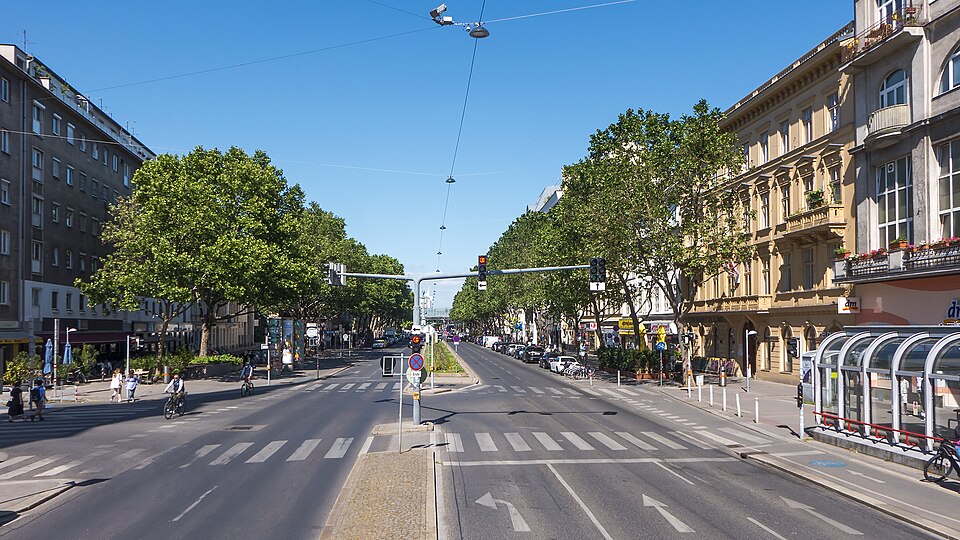
Image licensed under Creative Commons CC0 1.0 Universal (Public Domain Dedication).
Based on this enhanced situational awareness, FEDORA introduces a Social Optimum Model designed to support the allocation of green time across different transport modes. The model will be integrated into Vienna’s existing traffic signal control infrastructure and will enable signal plans to be adjusted in five-minute intervals. Rather than minimizing delays for a single transport mode, the Social Optimum Model aims to maximize overall societal benefit by considering the collective impacts of signal timing decisions across all road users.
A central component of this approach is the definition of appropriate weighting factors for the various transport modes. Determining these weights is inherently complex, as priorities may vary according to location, time of day, traffic demand, or broader mobility policy objectives. The pilot therefore not only assesses the technical feasibility of real-time multimodal optimization but also explores how adaptive weighting strategies can reflect evolving urban mobility needs and policy goals.
By combining advanced sensing technologies with innovative optimization methods, the Vienna pilot demonstrates how traffic management can evolve from vehicle-centered control to truly people-centered mobility management. Integrating the needs of pedestrians, cyclists and motorists into a single decision-making framework helps create a transport system that is not only more efficient, but also fairer, safer and better aligned with the goals of sustainable urban mobility.